
The Indus Valley Culture is striking due to its structured organization and city design, while its scripts continue to be an enigma.
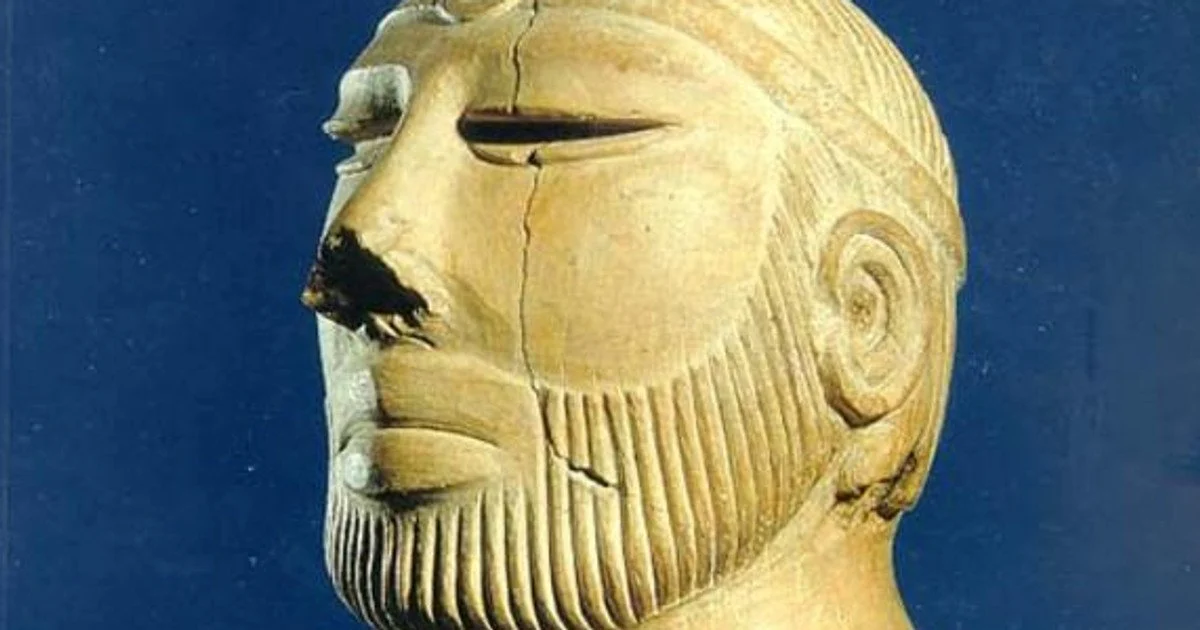
Indus Civilization. Photo: Mamoon Mengal CC BY-SA 1.0
The Indus Valley Culture possessed drainage systems, urban layouts, and commerce routes millennia ago. It prospered contemporaneously with Egypt and Mesopotamia, yet it endures as a riddle. Its downfall is often linked to alterations in the climate, according to scientists.
This was covered by the BBC.
The Indus or Harappan culture, which existed over four millennia ago, is regarded as one of the most sophisticated in the ancient realm. It flourished in the Indus River valley in present-day India and Pakistan and thrived roughly between 2600 and 1900 BC.
As per researchers, this culture brought together hundreds of towns and thousands of locales. The largest among these were Harappa and Mohenjo-Daro. Its magnitude surpassed that of Ancient Egypt and Mesopotamia.
A crucial attribute of the Indus culture was its intricate urban arrangement. Towns were constructed with direct avenues, uniform brick sizes, wells, and water distribution infrastructures. An extensive sanitation network existed beneath the roads—considerably before similar solutions came about in the Roman Empire. This signifies a significant degree of arrangement and comprehension of sanitation.
Commerce was also advanced. The residents of the culture sustained connections with Mesopotamia, exchanging timber, metals, adornments, and woven cottons.
In contrast to other early states, the Indus Valley Culture has presented no definitive proof of unified power. Archaeologists have not unearthed regal residences or luxurious sepulchers typical of ruling classes. This implies that governance may have been more communal.
“And another element that piques the interest of researchers: this culture is almost devoid of indications of conflict. Sparse weaponry, few illustrations of combat scenes, infrequent trauma among the skeletons discovered. This is not to say that conflict was entirely nonexistent — but it appears that aggression was not a defining characteristic of existence,” the piece conveys.
One of the foremost puzzles of the culture persists as its writing system. The surviving records are very concise and still have not been interpreted. Regardless, scrutiny reveals that they possess an intrinsic framework and regulations.
Researchers posit that the leading cause of the civilization’s deterioration was ecological changes. Around 1900 BC, the urban centers progressively began to diminish in importance, and their inhabitants started to abandon those territories. Archaeologists attribute these occurrences to alterations in the monsoon configuration.
The disturbance of the wind patterns impacted the environmental equilibrium: waterways and rainfall turned erratic, which rendered cultivation and existence generally difficult. In Mohenjo-Daro, archaeologists have located proof that locals attempted to safeguard themselves against inundations, which points to an elevation in ecological risks.
As scientists point out, these occurrences are pertinent even in contemporary times. They illustrate that even a highly developed and structured society can fail if it cannot adjust rapidly enough to swift ecological shifts.
Bear in mind that we previously announced that an iron implement fashioned from non-terrestrial substance was discovered within the enigmatic “ritualistic cavities.”