
© Collage ZN.UA / Getty Images / Gemini

Oleh Shamshur
The evolution and anticipated conclusion of the contemporary conflict in the Near and Middle East will hinge on the occurrences of the upcoming weeks . The state of affairs is now unfolding in a manner that contrasts with the optimistic forecasts of Donald Trump, who envisioned the military undertaking in Iran as a “brief expedition,” akin to the Venezuelan special operation. Its transformation into a widespread war, notably a protracted one, could engender substantial detrimental repercussions for Trump — both regarding foreign affairs and within the country, which is particularly sensitive for the president and his administration.
From the inception of the missile and aerial assaults on objectives in Iran, the immensely potent and effective American military apparatus, collaborating with its Israeli ally, has been able to secure impressive triumphs: a significant portion of Iran’s military assets have been obliterated, encompassing missile and drone launch sites and manufacturing plants; the Iranian Air Force and Navy have been essentially annihilated. The intent of this should have been to deprive the Iranian government of the capacity to destabilize the situation within the region. Nevertheless, this did not transpire .
In contrast to the United States, where, according to the readily available information, the primary foundation for deciding the war’s commencement time and its structure was Trump’s “instincts”, the Iranian leadership has meticulously geared up for a fresh American-Israeli offensive. An asymmetric tactic of “horizontal escalation” has been embraced, with the objective of modifying the “geometry” and duration of the armed struggle by amplifying its geographical parameters, augmenting the tally of nations entangled in it, and protracting the conflict over time. An element of this strategy is to heighten the political and fiscal expense of waging hostilities for the adversary, anticipating that human casualties and inflated consumer prices, disorder within the global energy and securities markets, will compel the United States to terminate the war under conditions acceptable to the Iranian regime.
The prevailing epicenter of the war is the Strait of Hormuz, which Iran has obstructed utilizing drones and other relatively inexpensive military hardware. As a consequence, 20% of the world’s petroleum commerce (on the Asian flank) was impeded, a considerable slice of the world’s provision of liquefied gas and fertilizers, and price tags for oil and fuel, along with maritime and other forms of transportation, surged dramatically. All of this was anticipated by military and civilian specialists, but materialized as a shock to Trump, who, as in the overwhelming majority of other matters, favored his intuition over skilled guidance, wagering on the swift downfall of the theocratic regime.
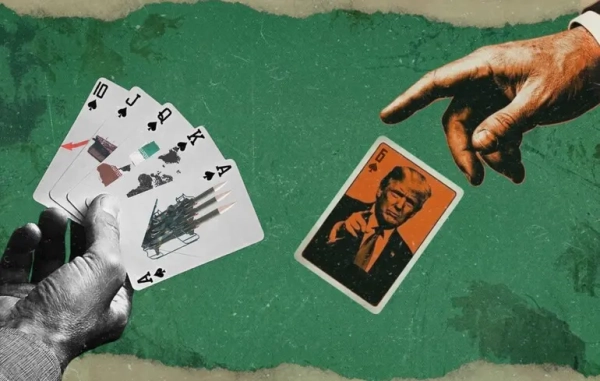
The present American president enjoys discoursing about the “cards” that a particular politician possesses or lacks. Politico cites a “person intimately familiar with the White House” as asserting: “We’ve certainly delivered [Iran] a sound drubbing on the battlefield, but to a substantial degree they [the Iranians] now hold the cards. They determine the duration of our involvement — and it’s their prerogative to decide whether we deploy ground troops.”
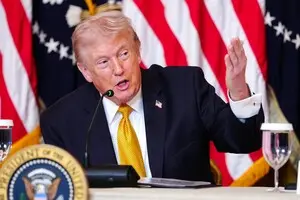
Trump continues to criticize US allies for “inaction” in the Strait of Hormuz — new statement
Notwithstanding the political unpalatability of the latter avenue, neither Trump nor his Secretary of War has definitively dismissed it: military authorities observe that barring the inclusion of at least a restricted contingent of special operations forces, it is unfeasible to accomplish the fundamental objective for the triumph of the American military undertaking — to seize Iran’s highly enriched uranium . Should the present Iranian administration endure, the probability of it employing enriched uranium to fabricate nuclear armaments will be elevated compared to the pre-war state .
For Trump, there exist two cardinal scenarios for a “victorious” culmination of the war: proclaiming triumph in light of the substantial detriments inflicted upon Iran and its armed forces, and concluding hostilities—or substantially intensifying them to attain objectives such as regime alteration in Iran and the ultimate eradication of its nuclear potentials. The enactment of each of these scenarios will eventually hinge on the volition of a solitary individual—Trump, encompassing all his “instincts” and “profound” intuition (according to his own affirmation). It is self-evident that he will be steered not solely by considerations of his own renown and political heritage. The influence of the war on this year’s midterm elections will hold no less consequence for Trump: the Republican party’s forfeiture of dominance over even one of the chambers of Congress will likely render his aspirations of constructing an “imperial presidency” unattainable.
The paramount factor within this context will not solely be triumphant accounts from the front lines or the diminution of security menaces emanating from Iran, but the war’s repercussions on the purchasing capability of average Americans and their escalating discontent with Trump’s handling of the economy. And herein the president encounters discernible predicaments. These are triggered by a precipitous (exceeding 40%) escalation in petroleum costs attributed to the obstruction of the Strait of Hormuz and the “arrivals” of Iranian projectiles and UAVs at the installations of the energy sector of the Persian Gulf nations. Irrespective of the USA’s status as the foremost oil producer, in accordance with the principles of global energy markets, the comprehensive surge in petroleum prices correspondingly instigated a spike in costs for all categories of fuel. This engendered an upswing in transportation and packaging expenditures; fertilizer prices have amplified: cumulatively, this is commencing to impinge upon the cost of consumer commodities. There exists the prospect of disruption to established supply networks of goods and raw resources. Against this backdrop, discourse has intensified concerning the deceleration in the expansion rates of the global and American economies, and even the peril of a novel economic downturn.
Economic vulnerabilities (“the cost of war”) will constitute a primary determinant shaping the American public’s sentiment towards the war with Iran: the overwhelming majority of Americans convey apprehension regarding the amplification in oil and fuel costs stemming from the conflict. In general, the depiction of Americans’ attitude towards the war is notably varied: public opinion surveys yield figures spanning from 50 to 29% in terms of support, but all studies corroborate the division of viewpoints emblematic of American society, contingent upon the respondents’ party affiliation: the metrics of endorsement for the war are substantially elevated among Republicans.
Trump’s core electorate is the most supportive of the war, despite the recent breach of campaign pledges to cease the utilization of US armed forces abroad. Concurrently, a noteworthy segment of Republican opinion shapers (for instance, Tucker Carlson) negatively appraise Trump’s interventionist “pivot” and issue cautions regarding the potential disintegration of the coalition that propelled him to power under the banner “America First!” Observers draw attention to the “dissident” sentiments pertaining to this, even within the uppermost echelons of the Trumposphere. It can be posited that public opposition to the war will augment should a threat emerge of its transmutation into a “prolonged war” entailing the quintessential deployment of American units and an augmentation in the tally of casualties among American soldiers. Under such circumstances, the midterm elections could metamorphose into a Waterloo for Republicans. The president manifestly comprehends this. Another inquiry pertains to the extent to which this comprehension will impinge upon his actions and his propensity to fabricate his own virtual reality and subsist within it.
Simultaneously, it cannot be precluded that in the proximate future, auspicious transformations will transpire for Trump within the theater of military operations and within Iran itself, potentially enabling him to offset the political impairments of the initial phase of the war to some degree. Notably, to fortify his stance in relations with China, which has strategically gambled on constructing an all-encompassing partnership with the Iranian theocracy (it is indicative that China is granted an exception in the blockade of Hormuz) and accrues political dividends from the attenuation of the American security presence in “its” region as a consequence of the Iranian campaign.
In totality, the trajectory of ensuing evolutions in the Middle Eastern war will harbor momentous ramifications for global politics. And as of now, we can delineate a minimum of two predicaments that amplify the perils for Ukraine.
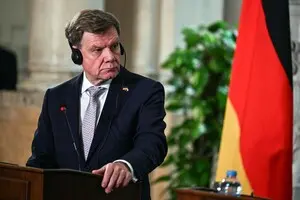
German Foreign Minister Warns War with Iran Risks Plunging “Whole World into Serious Crisis”
Firstly , transatlantic relations are undergoing yet another critical juncture, analogous to the Greenland crisis. Not merely a request, but a demand from Trump to partake in unblocking the Strait of Hormuz, directed towards European allies, encountered their more or less diplomatically packaged, yet unwavering opposition, dictated by the extreme unpopularity of the war within European societies and the absence of any consultations with partners preceding the Iranian campaign. Ultimately, this impelled the president to relinquish the notion of forging a coalition of unblockers and proclaim that the United States “does not require anyone’s assistance.” Within this characteristically Trumpian psychodrama, the following warrants our consideration: the US president rendered his demand a gauge of allegiance to his nation and the significance of NATO for its security.
According to Trump, the traditional allies of the United States have failed this assessment. In his estimation, “NATO is committing a markedly foolish blunder.” The nature of his retribution against the Europeans remains unknown, but it is unsettling that, within this context, he has recurrently cited providing support to Ukraine, which, in his judgment, principally fulfills the interests of the Europeans. Let's hope that Trump's disposition will not impede the functioning of the mechanism for procuring American armaments for Ukraine.
Secondly , under the prevailing circumstances, Russia stands as the solitary, virtually uncontested beneficiary of the war in the Middle East. The most substantial “gift” for Putin is the surge in petroleum prices, which will afford Russia the opportunity to ameliorate its financial standing and inject momentum into the war apparatus, which, on the cusp of this war, had ultimately commenced to malfunction. Supplementing this is the interim suspension of American oil sanctions to stabilize the global oil market. Energy analysts express reservations regarding the capacity of this measure to substantially decelerate the escalation in petroleum prices. What remains indubitable is the diminution in the markdown at which Russia is compelled to vend its oil, the augmentation in sales quantities, and the tangible prospect of erosion within the sanctions framework. Trump himself has already intimated the potential of not reverting to the application of the “suspended” sanctions. Appeals for “normalization” of relations with Russia in the energy domain have commenced to resound within certain European capitals — and not solely in Budapest and Bratislava.
Under these circumstances, the Russian dictator feels, according to some Western journalists, almost like a “triumphant,” to whom all those who require Russian energy resources should queue up. The Kremlin’s confidence was likewise bolstered by the persistent endeavors of Trump and his coterie to minimize the significance of Russia’s provision of intelligence and other forms of military assistance to the Iranian regime, and the US president’s public negation of the advisability of cooperating with Ukraine in the struggle against drones. Regrettably, as anticipated — in the “spirit of Anchorage.”