
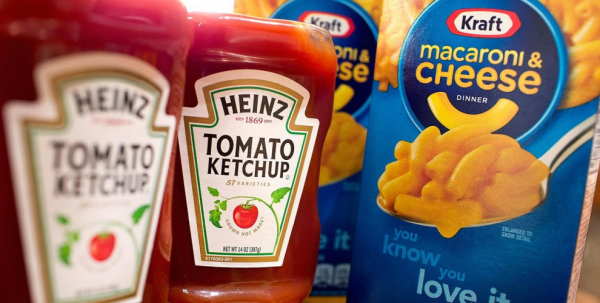
Unilever and Kraft Heinz have been in discussions for several months regarding a potential combination of certain segments of their food operations – a prospective agreement that could unite Unilever's food sector with Kraft Heinz's condiment division and establish a new entity valued at tens of billions of dollars, the Financial Times indicated. As per Reuters, the negotiations have already concluded without any finalized accord, and neither firm offered a statement.
It wasn’t a complete consolidation of both entities, but rather a merging of distinct assets: Unilever's food sector, encompassing brands such as Knorr, Marmite, and Hellmann's, alongside Kraft Heinz's sauces and condiments sector, inclusive of Heinz ketchup. If finalized, the transaction has the potential to unite some of the most recognized global brands within the ketchup, mayonnaise, sauces, and grocery categories.
The parties' inclination toward such a combination is attributed to the pressure on expansion within the global food industry. The FT points out that both Unilever and Kraft Heinz are compelled to adjust to soft demand for conventional packaged and processed goods, along with shifting consumer inclinations favoring more healthful alternatives. This is what prompts major corporations to reassess their portfolios, allocate sluggish assets, and seek out novel forms of consolidation.
For Unilever, these conversations occurred against the backdrop of a wider strategic assessment of the food business. According to Reuters and Bloomberg, the business is in the initial phases of appraising a conceivable separation or divestiture of food assets. The group has already shed numerous secondary businesses, including assets in the spreads and tea sectors, and current CEO Fernando Fernández hasn’t precluded further actions within the entire food division. Jefferies analysts appraise this sector at $36-37 billion , while Barclays — at approximately €30 billion .
Financial statistics also underscore the rationale behind such an assessment. As indicated by Reuters, Unilever’s food division generated roughly €2.9 billion in operating profit last year, but demonstrated only 2.5% sales growth , which falls short of the company’s target range of 4-6% . Against this backdrop, divisions with enhanced potential, notably beauty and wellbeing, appear more enticing to investors. Following reports of a possible spin-off, Unilever shares decreased by around 3.5% on March 18, as the market worries that another extensive restructuring might divert management attention following the recent partitioning of the ice cream business.
For Kraft Heinz, a possible merger with Unilever assets also seemed to be part of a larger quest for a fresh growth blueprint. In February, the company shelved its own strategy to divide its operations into two distinct units and declared that it would instead invest $600 million in marketing, sales, R&D, and revitalizing organic growth. CEO Steve Cahillane stated that the company’s primary challenges were “manageable,” although sales strain in the packaged food segment remained considerable. According to Reuters, Kraft Heinz’s net sales were predicted to decline 3% in 2024 and an additional 3.5% in 2025 , and the company’s shares have forfeited roughly 70% of their worth since the landmark merger.
Despite the fact that the discussions between Unilever and Kraft Heinz concluded inconclusively, the very occurrence of such dialogues is a noteworthy signal for the market. It substantiates that global food producers are progressively contemplating substantial M&A transactions, carve-outs, and spin-offs as a means to reignite growth amidst feeble consumer demand.