
Moscow might exploit the US engagement in the Middle Eastern conflict to its advantage in discussions concerning Ukraine.
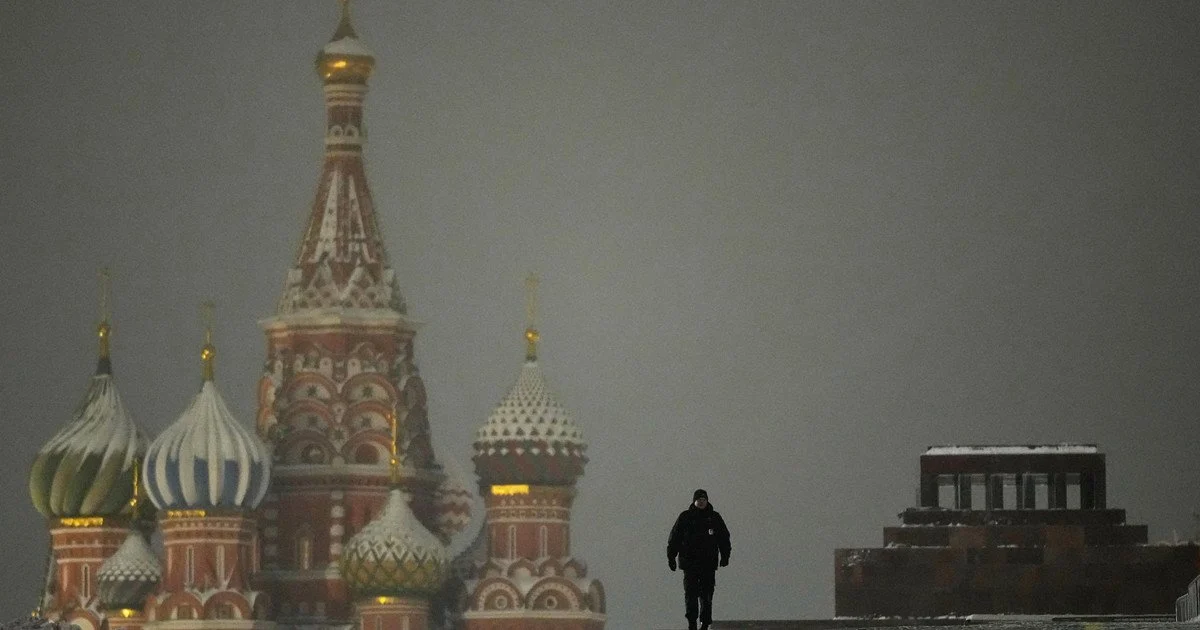
The Kremlin / © Associated Press
The Kremlin is critical of the United States regarding military actions targeted at Iran. Moscow is capitalizing on the increased tensions in the Middle East to set the stage for laying blame on Washington should peace talks in Ukraine falter.
This information is highlighted in a report from the Institute for the Study of War (ISW).
US experts point out remarks made by Russian Foreign Minister Sergei Lavrov, who voiced disapproval of American statements regarding US-Israeli operations aimed at Iran. He claimed that US President Donald Trump and Secretary of Defense Pete Hegseth are offering conflicting accounts about America's aims in Iran. He suggested the White House is aiming to instigate division and destabilization in the Middle East by creating a rift between Iran and the Gulf nations.
Furthermore, Sergey Lavrov drew a connection between the military operations in Iran and the Russian conflict in Ukraine. He implied that the US and Israel intend to involve the Persian Gulf countries in the conflict similarly to how the West supposedly embroiled Ukraine in its conflict with Russia. The Russian Foreign Ministry head asserted that a number of their politicians and analysts are uneasy about the timing of US actions against countries with whom they are in discussion, and its implications for peace talks in Ukraine.
Lavrov also accused the White House of undertaking military activities against Iran and Venezuela even amidst successful negotiations, referring to the Israel-Iran war in June 2025, where the United States also attacked Iran, the American operation against Venezuela on January 3, 2026, and the ongoing joint American-Israeli actions against Iran.
Lavrov stated that these Russian functionaries and political commentators expressed concern that the “spirit” of the US-Russia summit held in Alaska in August 2025 was diminishing. However, the minister from the aggressor nation sidestepped some of his assertions, maintaining that the “spirit” of the Alaska summit was less significant than its summit “agreements.”
ISW analysts underline that the Alaska “agreements” is an imprecise term. The Kremlin employs it to suggest that the US and Russia have purportedly entered into a formal accord. Simultaneously, Lavrov claimed that Moscow had detected no indications that Washington was negotiating with Russia in bad faith.
ISW cites Deputy Chairman of the Russian Security Council, Dmitry Medvedev, among the examples, who criticized US President Donald Trump for initiating a peaceful resolution during military actions against Iran.
“The Russian Federation typically leverages Medvedev to articulate more extreme commentary than the Kremlin is willing to express directly, while still mirroring Moscow’s actual perspectives. The Kremlin also utilizes Duma representatives as mouthpieces for its rhetorical positions, particularly for internal Russian audiences,” the ISW report detailed.
ISW believes that the Kremlin has been endeavoring to postpone and obstruct peace talks in Ukraine for an extended period, as it demonstrates no interest in any discussions that do not align with its original military objectives.
Analysts highlight that Moscow must balance its reciprocal relations with the United States alongside those with its allies and partners. The intensification of Moscow’s condemnation of the United States after the commencement of US-Israeli operations against Iran may suggest that it is finding it increasingly challenging to maintain this balance, ISW implies.
“Russia might also employ this explicit critique of the United States as a negotiating counterpart to justify its position in the event of future failure of talks pertaining to the war in Ukraine,” the Institute underscores.
As previously reported, Forbes indicated that Russian dictator Vladimir Putin could benefit from Trump’s conflict with Iran. Specifically, a drawn-out war in the Middle East could deplete the supply of American PAC-3 interceptor missiles for Patriot systems and other weaponry required by Ukraine.
Ukrainian President Volodymyr Zelenskyy affirmed that events in the Middle East will directly shape the trajectory of negotiations with Russia. Specifically, this could complicate the provision of missiles and air defense systems to Ukraine. Notably, the focus is on Patriot.