
Due to the rise in hostilities in Iran and the blockage of the Hormuz Strait, the largest Asian economies have experienced an energy crunch, compelling national governments to halt fuel exports and utilize their strategic stocks.
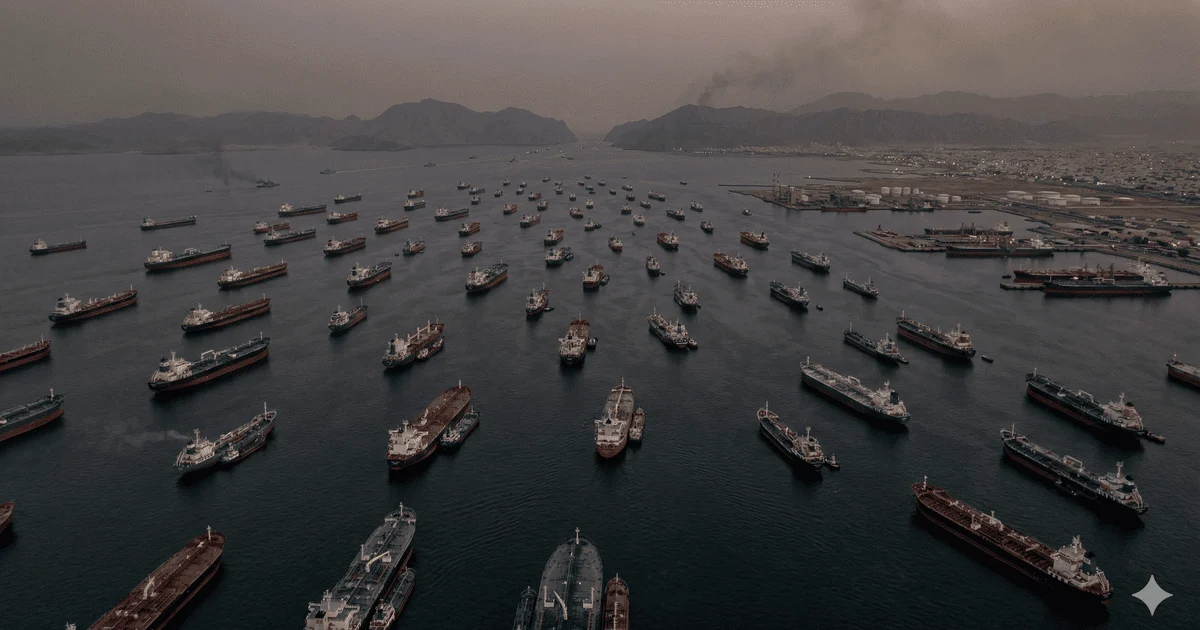
A cluster of tankers in the Persian Gulf / Illustrative image
Asia’s leading economies are girding for severe fuel deficits and escalating prices because of Iran’s shutdown of the Strait of Hormuz, a vital waterway that constitutes a pivotal route for petroleum and natural gas provisions from the Middle East.
Fortune reports on this.
Strait Blockade and Immobilized Vessels
Roughly 19 million barrels of crude transit the Strait of Hormuz daily, representing 20% of global commerce, along with one-fifth of the world’s liquid natural gas. Nevertheless, following the Iranian Islamic Revolutionary Guard Corps’ declaration of the strait’s closure and threats to engage any ships, traffic has virtually ceased.
Major global shipping firms, including Maersk, have suspended cargo reservations to the majority of ports in the area, and insurance providers are widely rescinding policies.
“In total, more than 3,000 vessels are currently marooned in the Persian Gulf, which represents roughly 6% of the planet’s oil tanker fleet,” Tim Huxley, managing director at Mandarin Shipping, communicated to the paper.
Asian Response and Price Surge
Asian nations are crucially reliant on energy from the region. For instance, imports originating from the Persian Gulf comprise 80-90% of Japan’s oil and 30-40% of China’s. Answering the crisis, governments have urgently begun curtailing sales of their own supplies. Thailand ceased the exportation of crude and petroleum goods on March 1, and China, on March 5, directed leading refineries to cease exporting diesel and gasoline.
The situation has already spurred a notable increase in the expense of logistics and the raw components themselves. The cost of hiring a large tanker has surged from $100,000 to $436,000 each day. Concurrently, on March 5, the price of Brent crude climbed nearly 3% to $83.80 per barrel.
Presently, Japan, South Korea, China, and India are depending on their extensive domestic stores, which are expected to last from two months to beyond 200 days. However, specialists caution that if the blockage prolongs, a significant rise in energy costs across the region is unavoidable.
It’s important to remember that the Strait of Hormuz constitutes one of the most crucial transportation arteries worldwide, and its impediment creates an immense peril to the entire international economy. Approximately 20% of the world’s petroleum supply travels through this maritime route each day, so its termination by Iran will certainly instigate scarcity and a steep escalation in energy expenses.