
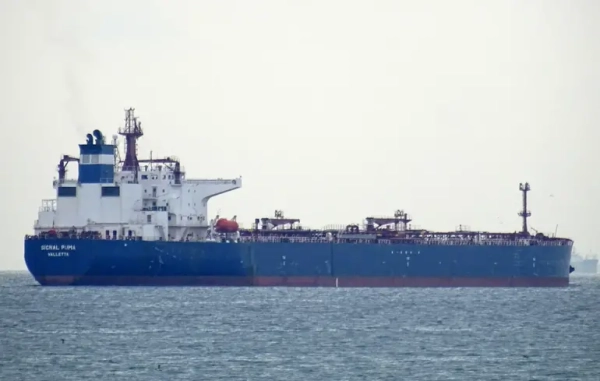
© Marine Traffic The authorities utilize oil earnings to perpetrate their misdeeds.
On Friday, February 6, the US Department of State publicly declared the implementation of penalties against 14 vessels from the shadow fleet, all implicated in the conveyance of Iranian crude and refined products, as detailed on the department’s digital platform.
Furthermore, restrictions were put in place concerning 15 corporate bodies engaged in commerce involving Iranian petroleum goods, along with two individuals linked to these organizations.
According to the Department of State, the Iranian administration has consistently placed its destabilizing actions ahead of the well-being and protection of its populace, as demonstrated by the regime’s widespread massacre of non-violent demonstrators. They pointed out that the penalized entities produce income that the regime employs to execute its illegitimate undertakings.
“The United States will persist in undertaking measures against a network comprised of carriers and traders participating in the transport and acquisition of Iranian unrefined oil, oil-based products, and petrochemicals, which constitute the regime’s principal financial resource,” the State Department asserted.
The department further stated that President Donald Trump is endeavoring to diminish the Iranian regime’s illicit oil dispatches as a component of the administration’s strategy of utmost pressure.
Iran and the US are anticipated to engage in discussions in Oman today, potentially marking the initial phase of a protracted diplomatic endeavor , given that a swift resolution to the growing friction between the two nations is improbable.
Recently, the US has augmented its maritime strength in the Middle East after Trump frequently cautioned Iran of intervention if Tehran does not consent to a nuclear agreement or cease the killing of protestors. The demonstrations within Iran have lessened, with the regime successfully maintaining control. Yet, can the regime afford to ease up, or has it merely deferred the predicament? Vyacheslav Likhachev in his essay “ After the Great Blood: What Awaits Iran — Stagnation, Thaw, or War? ” investigated the inferences the Iranian governing bodies are making and the alternatives left open to Tehran.