
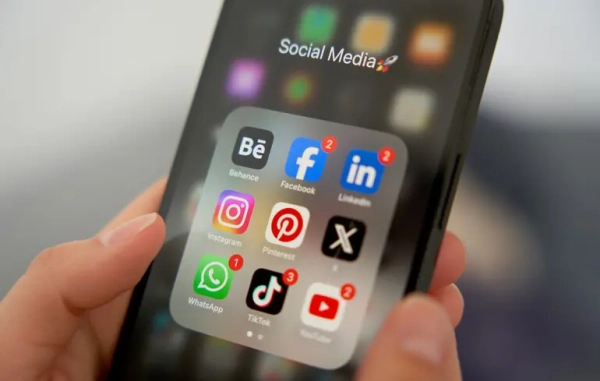
© Getty Images Specialists in education and digital technologies will take part in crafting the legislation.
Slovenia is formulating a piece of legislation to prohibit children under 15 from accessing social media, as stated by Deputy Prime Minister Matej Arkon during a press conference on Thursday, reported Reuters on February 5.
Slovenia emulates Spain and Greece, which this week also put forth proposals to disallow teenagers from utilizing social media before reaching a specific age. Across Europe, apprehensions are mounting concerning the addictive nature of this technology and its potentially detrimental impact on the moral and psychological well-being of youngsters.
According to the Slovenian Prime Minister, this initiative was launched by the Ministry of Education, drawing upon the experiences of other nations that have previously adopted similar measures.
Specialists in education and digital technologies will contribute to the formulation of the law to ensure its focus remains on safeguarding children and adolescents.
Arkon conveyed that the government aims to regulate social platforms where content is shared, specifically mentioning TikTok, Snapchat, and Instagram.
Reportedly, Spain seeks to prohibit social media usage for those under 16, while Greece is nearing the announcement of a comparable restriction for individuals younger than 15.
Other nations, including the UK and France, are also contemplating strengthening their approach to social media after Australia pioneered a ban on access to these platforms for children under 16, commencing in December 2025.
As a reminder, in the autumn of 2025, the European Parliament advocated for the EU to establish a minimum age of 16 for accessing social networks and various online services, in addition to outlawing practices deemed harmful and addictive. The Parliament approved a report insisting on enhanced protection for minors and obliging online platforms to adhere to digital regulations.
Members of the European Parliament articulated profound worries about the hazards encountered by minors online, noting that a quarter exhibit “problematic” smartphone usage. They underscored the necessity to reinforce safeguards against manipulative strategies that foster addiction and impair children’s ability to concentrate, highlighting that the prevailing degree of risks to the physical and mental health of children is unacceptable.