
The Toronto-based firm has finalized a $750 million funding round, spearheaded by current investors Khosla Ventures LLC and G2 Venture Partners, declared founder and CEO Raquel Urtasun. The round experienced significant oversubscription, exceeding its target by hundreds of millions of dollars, and the total fundraising process concluded within a single quarter. The company chose not to reveal its present valuation.
Additional participants in the Series C included Uber, the venture capital arms of Nvidia Corp. and Volvo AB, Porsche Automobil Holding SE, and funds and portfolios overseen by BlackRock Inc. Waabi also secured an additional $250 million from Uber, contingent on reaching specific milestones, with the aim of deploying a minimum of 25,000 autonomous taxis, utilizing its software exclusively on the Uber platform, as per the company’s statement. Information regarding vehicle manufacturing collaborators, initial launch locations, and fleet managers will be disclosed at a later time, Urtasun added.
A multitude of entities within the autonomous driving sector, spanning from tech startups to taxi operators, are striving to establish thriving businesses grounded in this technology. By venturing into the robo-taxi domain, Waabi aligns itself with other software developers that have formed partnerships with Uber or Lyft Inc. to access the broader consumer market on a large scale.
For its part, Uber is actively engaged in the robo-taxi competition, cultivating extensive collaborations rather than pursuing acquisitions or internal technology development, as it has done previously. Urtasun stated that Waabi is able to adopt a cost-effective strategy due to its intention to tailor the technology initially developed for trucks for deployment across a range of vehicle types. Similar to Waymo (Alphabet Inc.), the leading U.S. robo-taxi provider, Waabi’s vehicles will be outfitted with numerous sensors to perceive their surroundings.
However, according to Urtasun, Waabi's technology stands apart in its diminished need for extensive mapping and observation of numerous scenarios to train in new environments, facilitating quicker verification of the system's performance with a supervising driver.
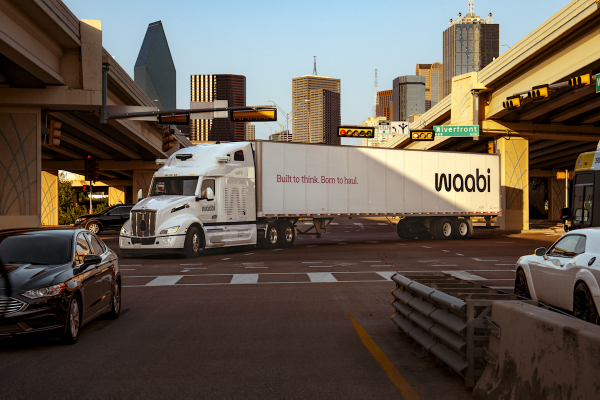
Waabi entered into an agreement with Volvo the previous year to manufacture autonomous trucks, though the timeline for live, driverless trials on public roadways has been postponed. The company opted to wait for a fully redundant hardware platform from Volvo to be ready before continuing with the trials, according to a Waabi spokesperson.
Source: Bloomberg