
Widespread demonstrations in Iran have resulted in a death toll of at least 5,000 individuals, encompassing security personnel. The government attributes this to “terrorists and separatists,” and courts have authorized capital punishment.
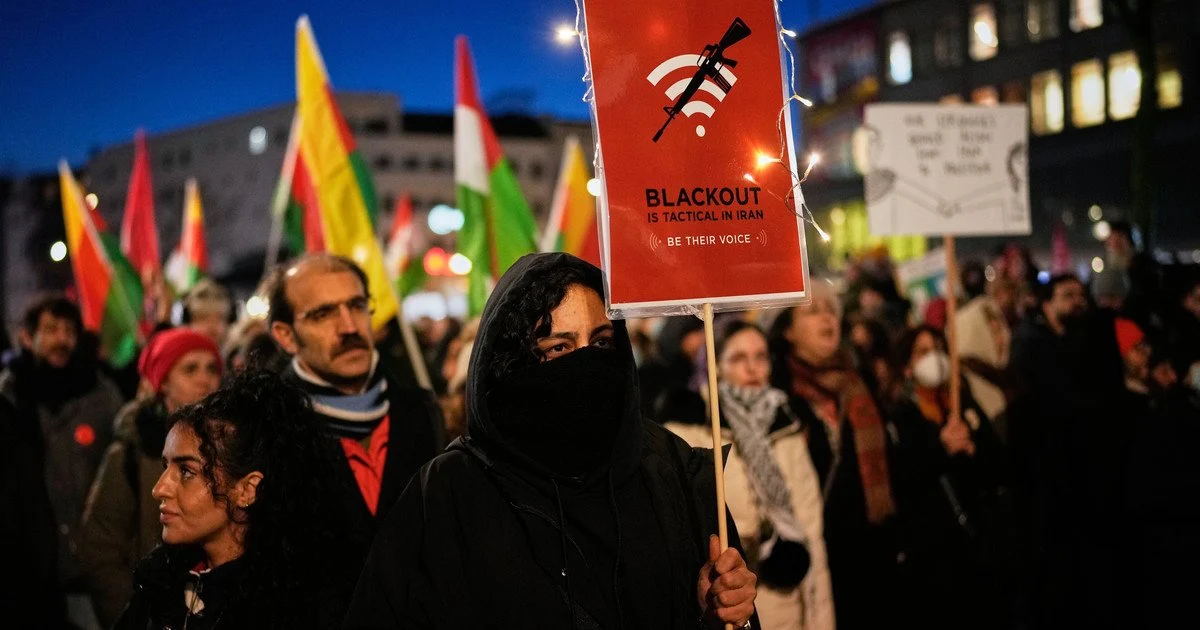
Protests in Iran / © Associated Press
A minimum of 5,000 individuals have perished amid extensive demonstrations throughout Iran.
This information was provided by an Iranian representative, referencing verified statistics, as reported by Reuters.
He mentioned that roughly 500 members of the security forces were among those killed. The authorities have laid the blame for these deaths on “terrorists and armed insurgents,” alleging they murdered “innocent Iranians.”
The demonstrations began on December 28 due to economic difficulties and, within a couple of weeks, had evolved into large-scale rallies calling for the overthrow of the theocratic regime. According to press accounts, these were the most violent disturbances in the nation since the 1979 Islamic Revolution.
US President Donald Trump has stated multiple times that he is willing to intervene if protesters continue to be killed or executed. On Friday, he stated on social media that Iranian officials had supposedly revoked the planned executions of 800 individuals, and thanked the leaders in Tehran for their decision.
The following day, Iran’s Supreme Leader Ayatollah Ali Khamenei labeled Trump a “criminal” in a public statement, holding him accountable for the casualties which, according to Iranian authorities, resulted from US support for the demonstrations.
“We will not plunge the nation into conflict, but we will not let domestic and international offenders go unpunished,” Khamenei declared, acknowledging “several thousand deaths.” He accused “terrorists and rioters” with connections to the United States and Israel of instigating the violence.
In parallel, the Iranian judicial system has made it clear that death sentences remain a possibility. Judiciary spokesperson Asghar Jahangir stated that several actions have been categorized as “muhareb” – which, under Iranian law, translates to “war against God” and is punishable by death.
On Saturday, in an interview with Politico, Donald Trump said that “it’s time to seek new leadership for Iran.”
According to the American human rights organization HRANA, the death toll reaches at least 3,308 individuals, with another 4,382 cases currently under investigation. Over 24,000 arrests have also been verified.
An Iranian official indicated that the ultimate death count was unlikely to “increase substantially” and again attributed the unrest to Israel and armed groups based abroad, which he claimed were supporting the protesters.
The country’s leaders have historically blamed external adversaries, including the United States and Israel, for the mass demonstrations. Government media and observers report that a forceful crackdown has largely suppressed the protests.
A Tehran resident reported witnessing riot police firing upon groups of demonstrators, predominantly young men and women. Video footage from the site, shared on social media and partially confirmed by Reuters, illustrated a harsh suppression of demonstrations across the nation.
The highest number of fatalities has been documented in the Kurdish regions of northwestern Iran. According to an Iranian official, who requested anonymity, this is where the most intense combat has transpired. Kurdish separatist factions have become more active in the region, and the level of aggression has been among the highest throughout the entire span of the protests.
Reuters had previously reported that armed Kurdish groups were attempting to enter Iran from Iraq, potentially indicating efforts to exploit the volatile situation.
The dissemination of information from the country has been hindered by the internet shutdown. According to monitoring organization NetBlocks, access to the network was partially restored for only a few hours, after which restrictions were reinforced.
Foreign individuals who have visited Iran have also recounted accounts of disorder and violence in the streets, with one witnessing buildings, banks, and vehicles being set ablaze, as well as knife attacks on passersby.
As a reminder, Iran’s Supreme Leader Ayatollah Ali Khamenei openly acknowledged the magnitude of the tragedy that has engulfed the nation during the recent unrest. In his address, he confirmed that “several thousand” people have died as a consequence of the protests, but firmly dismissed any culpability on the part of the security forces.