
© Collage, ZN.UA

Petro Gerasimenko
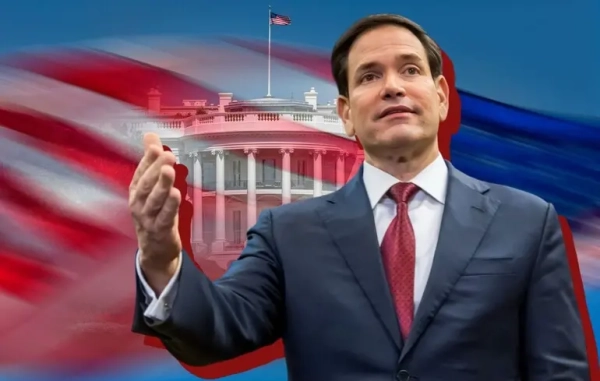
The efficacious and rapid US military operation in Venezuela, which delivered a severe setback to the worldwide aspirations of Russia and China, proved advantageous to US Secretary of State and Acting National Security Advisor Marco Rubio.
The leader of the US State Department has invariably advocated for a stringent strategy against dictatorial leftist governments in Latin America. The seizure of Nicolas Maduro has considerably boosted Donald Trump's self-esteem and reinforced Marco Rubio’s already noteworthy standing within the current administration. Given a fortunate set of circumstances, the US Secretary of State may discern a route to the apex of political influence.
Republican polls reveal that Vice President J.D. Vance continues to be the frontrunner among potential candidates for the 2028 primaries. Nevertheless, there exists a trend indicating a gradual waning of his favor. According to a December survey by Atlas Intel, Vance is poised to be endorsed by 46.7% of those surveyed. In September 2025, the vice president possessed 54.6% confidence. Conversely, Marco Rubio’s backing augmented to 23% , placing the Secretary of State second among the Republican Party’s presidential contenders. It is crucial to emphasize: the public opinion poll transpired before the special operation in Venezuela, where Rubio assumed a pivotal role. Consequently, his posture may currently appear more favorable.
Subsequent to the accomplished capture of Nicolas Maduro, bookmakers have similarly documented a marked surge in wagers on Marco Rubio as the Republican presidential designee. Despite the US Secretary of State’s prospects having nearly amplified twofold, J.D. Vance presently retains the advantage.
WSJ: Venezuela’s power battle moves to the White House
Per the Harvard CAPS/Harris poll, Marco Rubio ranks among the most well-regarded officials within the Trump administration. His net favorability rating stands at 3%, matching that of Health and Human Services Secretary Robert Kennedy Jr. In comparison, J.D. Vance registers merely 1% approval. While Marco Rubio presently trails Vance in terms of backing amongst Republicans, he persists in demonstrating robustness among Latinos. The secretary of state also possesses two significant merits : diminished degrees of unfavorable sentiment from Democratic voters and a favorable equilibrium of support among independents — plus 15%. The YouGov poll, executed from September 5 to 8, 2025, indicated that 33% of Republicans and Republican-leaning independents would entertain backing Rubio in the presidential primary. Moreover, Republicans who do not align with the MAGA movement and seek adept US leadership in foreign policy are more positively inclined toward the Secretary of State’s candidacy.
President Donald Trump remains elusive and noncommittal when prompted regarding whom he would prefer to witness as his successor. However, the White House chief has repeatedly, in a semi-jocular fashion, cited the names of the vice president and secretary of state in relation to prospective presidential candidates. Although Rubio has voiced his endorsement of Vance should he secure the nomination, this does not imply an absence of presidential aspirations. In times past, the Latino politician has already illustrated the capacity to modulate his stance according to shifting conditions.
The Trump administration’s escalated foreign policy emphasis on Latin America could substantially augment Rubio’s standing and position him at the forefront of the contest against Vance. Much will hinge on the trajectory of occurrences in Venezuela. At present, Washington appears to have opted for a controlled and measured dismantling of the Maduro administration, cognizant of the potential turmoil of civil disruption in the event of an expeditious transition of authority. Such a strategy arguably holds prudence, given that American intelligence assessments propose that Maduro’s confederates are more equipped to administer the nation and can furnish stability throughout the transitional phase.
Venezuela is not the sole Latin American nation where the United States has established an objective of altering the governing regime. President Donald Trump has previously disseminated several pronouncements since January 3, wherein he has issued menaces toward Cuba . This nation, which persists under the governance of the Communist Party, maintained a close alliance with Venezuela and procured petroleum and financial sustenance from Caracas. Nevertheless, the ruling regime’s positions have currently become exceedingly susceptible. On January 11, the American leader implored Cuban authorities to “broker an accord prior to its being too late.” He appended that petroleum and currency no longer flow to the island.
Trump “proclaimed” himself acting president of Venezuela
Indications suggest that Washington is genuinely committed to orchestrating the overthrow of the communist autocracy in Havana. Should this venture succeed, Rubio’s renown will amplify even further. Trump is predisposed to heed those who afford him the occasion to revel in the limelight. If Rubio manages to exhibit efficacy in Latin America and furnish Trump with moments of triumph, the Secretary of State will procure a propitious launching pad for his professional trajectory. Subsequently, the head of the State Department will possess a prime occasion to challenge Vice President Vance in the contention for the 2028 nomination. However, for this scenario to materialize, Rubio seemingly must confront novel trials.
In 2025, Donald Trump engendered a circumstance of mutual rivalry between the Secretary of State and his special representatives within the domain of foreign policy. A distinct function was enacted by Steve Witkoff, a businessman proximate to the American president, who unsuccessfully endeavored to resolve the matters of the Iranian nuclear program and the cessation of the Russian-Ukrainian conflict. Solely Rubio’s intervention facilitated an alteration in the tenor of the 28-point peace blueprint, rendering the accord more agreeable to Ukraine.
It is entirely plausible that, in 2026, the sway of Trump’s special emissaries, such as Steve Witkoff, will partially abate. Nonetheless, one ought not anticipate that American foreign policy will entirely divest itself of the attributes of voluntarism and disarray, given that the function of other individuals may escalate therein. Foremost, this pertains to the deputy chief of staff of the White House for policy and homeland security, Stephen Miller. Albeit his formal designation, it would appear, bears no direct linkage to the realm of international affairs, the Trump administration operates under its own tenets. This epitomizes the quintessential scenario wherein influence is dictated not by position. It is a consequence of ideological affinity, the capacity to resonate with the president, sustaining his profound aspirations.
Trump has previously articulated his yearning to establish dominion over Greenland at the inception of his second tenure. He is presently reignited by this notion. His Arctic predilections are actively buttressed by adviser Stephen Miller. In a commentary to CNN on January 5, the official underscored that Greenland ought to constitute a segment of the United States. He then affiliated the resolution of this matter with national security. “To ensure the United States guarantees the safety of the Arctic region, safeguarding NATO and NATO’s interests, Greenland should unequivocally be an integral component of the United States, a subject for our national dialogue,” Miller asserted. He elaborated, “We inhabit a realm governed by might, puissance, and dominance.”
US lawmakers to visit Denmark after Trump threatens to seize Greenland
It warrants acknowledgment: the US Secretary of State and the Deputy Chief of Staff of the White House do not stand as adversaries across all domains. Marco Rubio and Stephen Miller encounter no predicament in identifying shared ground pertaining to Venezuela and US policy concerning Latin American nations. However, notable discrepancies subsist within their perspectives on relations with European allies . The head of the State Department favors a Reagan-esque foreign policy framework, accentuating longstanding alliances and circumscribed interventionism where requisite. Rubio, akin to numerous Republicans, advocates for a nonviolent resolution to the Greenland issue. He would favor the culmination of an accord that safeguards standard relations within the NATO bloc. However, his aptitude and capacity to efficaciously resist Trump’s impetuous desires remain constrained.
Conversely, Stephen Miller allocates substantially less emphasis to upholding established transatlantic alliances. He champions the tenets of American isolationism, infused with elements of neo-imperialism. Consequently, we shall imminently observe how Rubio must counterbalance Miller’s excessively expansionist and bellicose inclinations toward the planet’s largest island, reconciling them with the preservation of Western unity and the image of America.