
Berlin is in its fourth day of a massive blackout after cables were set on fire at a power plant. About 45,000 households and more than 2,000 commercial properties in the Steglitz-Zehlendorf district were left without electricity and heat. The investigation is ongoing, and local authorities are calling the attack on the power grid “terrorism.” Berlin's senator for economic affairs, Franziska Giffay, said the power cables were “blown up with incendiary devices.”
VIDEO OF THE DAY
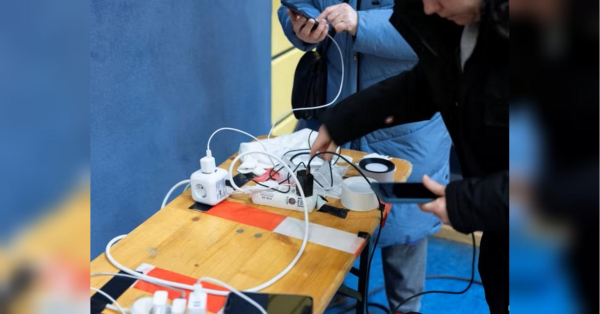
While Germans are trying to adapt to new conditions — some are lighting rooms with candles, others are moving to familiar or emergency shelters — Ukrainian refugees have organized their own shelter. According to Radio Liberty, in the AdlerA eV center created by the Ukrainian community, you can charge your phones, warm up, drink hot tea, or even prepare warm food for children.
Oksana Orel, who found refuge in Berlin after the full-scale invasion began, explains: the point was opened not only as a sign of gratitude for Ukraine's support, but also to share the experience of surviving during blackouts. “We say: it's okay if there will be no electricity for a few days – there are blackouts in Ukraine too. Everything will be fine,” she says.
For many Germans, the situation came as a shock. “In 13 years, this has never happened,” says Ukrainian Olga Danik, a longtime resident of the Steglitz-Zehlendorf district. Her neighbors are confident that the state will help, but they are not used to quick decisions in times of crisis.
ADVERTISING
Ukrainians joke on social media: “Our energy workers are repairing under fire – and people have light and heat. We need to bring our people here so they can teach.”
Thus, the Ukrainian experience of living under blackouts became unexpectedly useful for Berlin residents, who were experiencing a prolonged power outage for the first time.
Previously, “FACTS” reported on the migration crisis in Germany, where there were calls for mass deportations of Syrians and Ukrainians.
ADVERTISING