
The tale of Bashar Assad could be mirrored in Tehran: Ali Khamenei has designated a list of 20 intimate confidants for a departure to Russia.
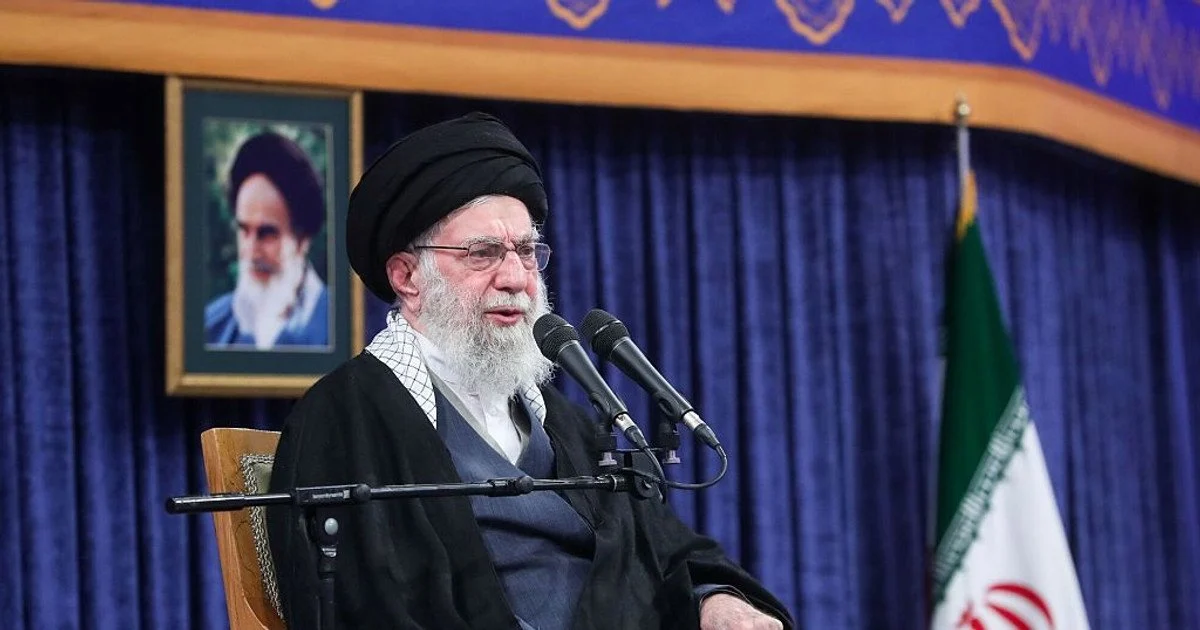
Iran's Supreme Leader Ali Khamenei / © Getty Images
In the face of demonstrations within Iran, Supreme Leader Ali Khamenei has conceived a clandestine scheme for evacuation to Russia if he forfeits authority over the defense forces. Intel suggests the 86-year-old cleric has already arranged finances and foreign residences for himself and kin.
This is detailed in an article within The Times, referencing an intelligence report.
As per the account, Khamenei is contemplating exiting Tehran alongside his close circle—reaching approximately two dozen individuals, inclusive of relations—should it become evident that the army and protective services deployed to quell the disturbances are defecting, aligning themselves with the demonstrators, or disregarding directives.
“Contingency plan B” entails the flight of Khamenei, alongside his inner web of associates and family, notably his offspring and favored successor, Mojtaba,” divulged the intelligence informant.
Specifics of Khamenei's departure plan to Moscow
Former Israeli intelligence operative Beni Sabti, a decades-long veteran who fled Iran eight years following the Islamic Revolution, stated that Moscow would be Khamenei’s end location upon evacuation, as “there remains no alternative locale for him.”
According to Sabti, Khamenei also “holds Putin in high regard, and Iranian heritage shares resemblances with Russian.”
This blueprint partially draws from the ordeal of his partner, former Syrian President Bashar al-Assad, who in December 2024 departed Damascus and journeyed to Moscow, where his relatives resided, preceding the seizure of the capital via opposition groups.
“They have devised an escape path from Tehran should they perceive the necessity to flee,” the informant mentioned.
As per their information, preparations encompass “accumulating capital, offshore holdings, and liquid assets to assure a secure exit.”
It is well documented that Khamenei presides over a comprehensive network of resources, largely concentrated within the framework of one of Iran’s most potent organizations – Setad. It constitutes a piece of a web of quasi-governmental philanthropy organizations notorious for their monetary discretion. As indicated by a 2013 Reuters investigation, the accumulative worth of these assets was approximated at $95 billion and comprised enterprises and real estate under Khamenei’s complete oversight.
A multitude of his nearest allies, among them the Secretary of Iran's Supreme National Security Council, Ali Larijani – previously cautioning US President Donald Trump against intervening in Tehran's affairs – maintain relatives presently residing abroad, notably within the US, Canada, and Dubai.
Under what conditions will Khamenei initiate his escape strategy?
The escape roadmap would be triggered solely if Khamenei concluded that the protection forces were ceasing adherence to his commands, sources revealed. Desertion or betrayal presents considerable obstacles, given the regime leader’s diligent safeguard of loyalists, command over essential personnel assignments, and ensuring security for those close at hand, as detailed within a psychological profile assembled by Western intelligence and conveyed to The Times.
In parallel, the aforementioned document indicates that, subsequent to the 12-day conflict with Israel the prior year, Khamenei has grown “feebler in both mental and physical capacities.” His appearances in public have diminished, and, significantly, he neither spoke nor emerged during the closing days of the disturbances. Amidst the conflict, he sought shelter in a reinforced bunker, evading the destiny of several prominent IRGC personnel, a factor that has intensified his “fixation on survival.”
Analysts portray the ayatollah as a “suspicious” leader – this trait, as they convey, underpinned the concept of evacuating the nation amid security force disloyalty.
“On one front, he is driven by profound ideology; conversely, his assessments exhibit pragmatism: he demonstrates readiness for tactical concessions for the pursuit of an overarching ‘ultimate objective’. He adopts a long-term perspective,” the evaluation highlighted.
For context, demonstrations within Iran, spurred by the economic downturn, have intensified into violent confrontations alongside the police, marking the most extensive in the past triennium. Within the province of Lorestan, no fewer than three demonstrators and one Basij combatant were slain during assaults on police stations, multiple individuals incurred injuries, and upwards of 29 individuals have already been apprehended. Amid the tumult rippling through a multitude of the nation’s metropolises, US Ambassador to the UN Michael Volz articulated his backing for the Iranian populace in their pursuit of autonomy, casting blame upon the regime for steering the nation toward battle and destitution.