
An age-old maze in Solapur might unveil the mysteries of Indo-Roman commerce.
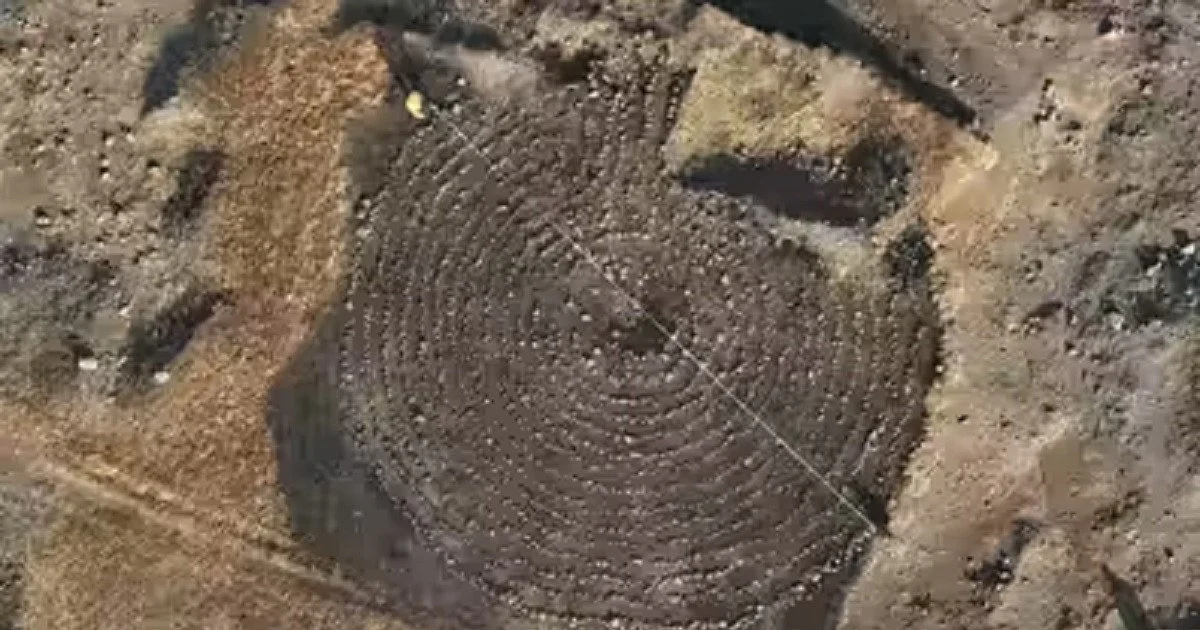
Labyrinth / © The Times of India
Within India’s Solapur region, researchers have unearthed what is believed to be the nation’s most expansive circular stone maze, bringing to light the area’s historical trade and cultural links.
This information comes from The Times of India.
The maze sits in the Boromani grasslands and spans approximately 15 by 15 meters. It comprises 15 layered stone circles, directing towards a closely packed central helix. The edifice exhibits a remarkable degree of planning and construction accuracy.
Maze specialist Jeff Soard points out that the framework is aligned with the traditional maze blueprint, but includes a distinctively Indian trait: a central coil recognized as a chakravyuh. In the ancient Indian tale Mahabharata, the chakravyuh functioned as a multifaceted military tactic employed to encircle adversaries.
The maze was not found during digs, but through wildlife observers from a local NGO who stumbled upon an odd stone arrangement in the grassland.
Researchers place its age at roughly 2,000 years, coinciding with the Satavahana reign, a period when trade and cultural exchanges flourished. Initial findings imply the maze’s designs echo Roman coinage, which may hint at early Indo-Roman business exchanges.
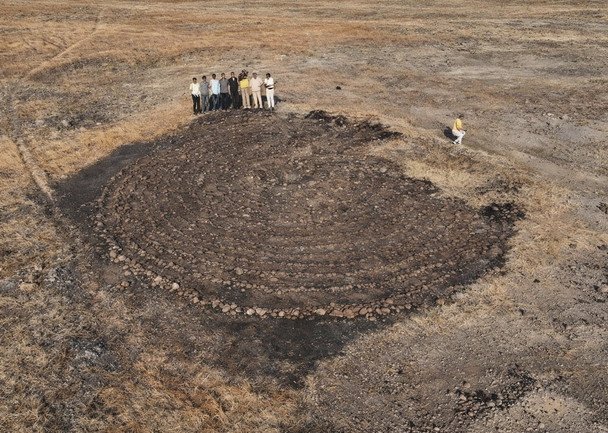
© The Times of India
Specialists surmise that similar mazes could have acted as landmarks or figurative symbols for merchants journeying from the Maharashtra coastline inland, swapping gems and wine for spices, silk, and indigo pigment.
As a reminder, we had previously reported on the discovery of an unusual female burial in Norway, situated in the center of a field, accompanied by scallop shells positioned near her mouth.