
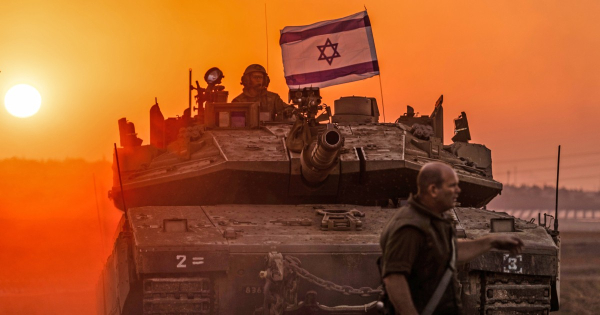
Israel strikes Iran’s nuclear facilities. In response, ballistic missiles, a breakdown in negotiations, and the threat of regional war. This is not just another escalation in the Middle East, but one of the most dangerous moments in recent decades. Who else, besides the United States, can stop this military conflict? The main points from the Foreign Affairs analysis
Buy an annual subscription to 6 Forbes Ukraine magazines with informative materials, ratings and analytics from UAH 1,350 .
The conflict between Israel and Iran has gone beyond the struggle of the secret services and turned into a direct clash between these countries with unpredictable consequences for the Middle East. While Iran attacks Israel in response and breaks diplomatic channels, Arab states are trying to maintain a balance – not to become a victim of the escalation of the conflict, but also not to be an accomplice.
On June 12, Israel began a prolonged bombing campaign against Iran’s nuclear infrastructure, the regime’s leadership, and oil and weapons depots, in order, in the words of Israeli Prime Minister Benjamin Netanyahu, to “degrade, destroy, and eliminate the threat” of a potential Iranian nuclear weapon.

Popular Category Money Date Yesterday Quiet renewal, new mega-ministries and old staff. The President’s Office dared to change the Prime Minister for the first time during the war. How the government renewal was prepared and who will become ministers
In response, Iran launched a massive ballistic missile strike against Israel and withdrew from nuclear talks with the United States, which were scheduled for June 15.
For a year and a half, Arab states have been wary of being drawn into the conflict between Iran and Israel. But with the escalation of hostilities and regular missile flights across the Persian Gulf region, neighboring countries are no longer asking “if” but “when” the war will reach them, Foreign Affairs writes.
Iran has long posed a threat to its neighbors through its ideological expansion, its nuclear program, its support for proxy forces in Iraq, Lebanon, and Yemen, and its support for the former regime of Bashar al-Assad in Syria. In 2019, the Arab world watched with alarm as Iran attacked oil facilities in Saudi Arabia, according to UN, US, and Saudi investigators. Further alarming was Tehran’s transformation of the Houthis into a long-range threat that in 2022 struck civilian targets in the city of Abu Dhabi.
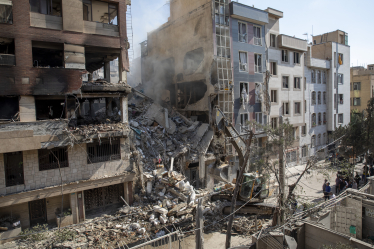
The aftermath of the destruction in Tehran from the Israeli army attack, June 13, 2025 Photo Getty Images
On the other hand, the Gulf states have enjoyed better relations with Israel in recent years. But Israel’s prolonged and brutal military operation in the Gaza Strip, its treatment of Palestinians in the West Bank, and its reluctance to negotiate peace or security after the war are worrying and hindering the process of normalizing relations. Israel’s attacks on Iran’s energy infrastructure could be an attempt to draw Arab states into the conflict, Foreign Affairs writes. Iran could retaliate by attacking U.S. military bases in Arab countries, oil facilities, or shipping in the Strait of Hormuz, Foreign Affairs adds. This would destroy regional stability, undermine Saudi Arabia’s Vision 2030 , the investment climate, and the development of the Gulf states.
De-escalation as a way to resolve the conflict
There remains a narrow window of opportunity to avoid a full-scale war between Israel and Iran. But given the US’s cooling to diplomacy, it is the countries of the Middle East that must stop the escalation. Only the Arab states and Turkey have established working relations with both Israel and Iran and the US. These countries must now put forward proposals for de-escalation. They must create a regional mediation initiative that will allow them to act as intermediaries between the parties to the conflict.
To avoid strikes, Arab states have tried to distance themselves from Israel’s actions as much as possible. Saudi Arabia and the UAE have condemned the military campaign. Turkish President Recep Tayyip Erdogan has said he will do “everything possible” to prevent an escalation. It is unclear what Turkey is proposing, but countries in the region have unique leverage to influence the situation.
To achieve de-escalation, regional governments should initiate a diplomatic campaign, perhaps under the auspices of the Arab League , that would involve proven diplomatic channels. The goal is to organize indirect talks between Iran and Israel, achieve a “cooling off” period and reduce the intensity of strikes, Foreign Affairs comments. It is also worth opening a separate channel to protect energy and maritime infrastructure. Such initiatives would also signal to the United States that the region is committed to peace and has a plan of action.
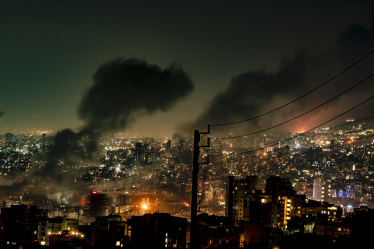
Columns of smoke over Tehran after Israeli strikes on nuclear and energy infrastructure facilities, June 15, 2025 Photo Getty Images
US involvement in the war
The United States may enter the war on the side of Israel, writes Foreign Affairs. In this case, Iran will be even more eager to attack Arab states on whose territory American military bases are located. Attacks by Iran on US bases or ports in the Persian Gulf would be a disaster: a threat to oil exports, investor confidence, and economic development.
There is hope that the countries of the region will be able to convince the United States not to enter the war. This is helped by the recent visit of US President Donald Trump to Arab countries. During private meetings, he made it clear that he is ready to support their security priorities, publicly distanced himself from the idea of American military interventions and emphasized partnership.
Achieving a peace agreement will be difficult. Iran and Israel are deeply entrenched in their own positions. The world needs a sustained diplomatic effort involving all parties, including Washington. But it is regional players who can and must give this process a boost, Foreign Affairs concludes.